
7 Questions Behind Conversion Focused Web Design
Plenty of small business websites look polished and still bring in almost no leads. This guide is for owners who want a site that earns inquiries instead of compliments, and it walks through the seven questions AIPro.PH asks before any website build to make sure the result converts.
Why a Good Looking Website Still Fails to Convert
Conversion focused web design starts long before anyone picks a color, a font, or a hero image. Most agencies open a design tool first and ask about your goals later. That order is backwards, and it is the reason so many businesses pay for a beautiful site that quietly underperforms.
A site can be clean, fast, and modern and still send visitors away unsure what to do next. Research from the Nielsen Norman Group on how people read online found that users scan in patterns rather than reading word for word. If your structure, headline, and call to action are not planned around that behavior, polish alone will not save it.
So before AIPro.PH touches a layout, we ask seven questions. The answers shape the structure, the copy, the conversion path, and the order we build the pages in.
The 7 Questions That Shape Conversion Focused Web Design
1. Who is your ideal customer, and what do they search for before finding you?
This sets the keyword strategy and the page structure before any design work begins. A plumber's customer searches very differently from a software buyer, and the words they type belong in your headings and page titles. Get this wrong and you build pages nobody is looking for.
2. What is the one action you want a visitor to take on every page?
A business that wants visitors to schedule a call builds a different site than one that wants them to buy a product or download a guide. Naming that single action upfront gives every page a clear conversion path instead of a pile of competing buttons.
3. What is your single biggest business-winning differentiator?
This becomes your homepage headline. Not your logo. Not a clever tagline. The real reason a customer should pick you over the three competitors open in their other tabs. A homepage that leads with your differentiator does more conversion work than any animation.
4. What objection does your ideal customer have before saying yes?
Every buyer hesitates somewhere: price, trust, timing, or whether you understand their situation. That objection goes straight into the subheadline, the FAQ, and the placement of your trust signals. Answering it on the page removes the friction that quietly kills inquiries.

Want help mapping your own seven answers? Book a free 30-minute consultation with AIPro.PH. No pitch, just a clear plan for the pages that will actually convert. |
5. What proof do you have that you deliver results?
Client photos, testimonials, specific numbers, real case studies. Stanford's Web Credibility research showed that people judge whether they can trust a business partly on the credibility cues a site gives them. Without proof, we can build a good looking website, not one backed by real results.
6. What pages get the most traffic but the fewest inquiries?
These are the first pages we fix. They already pull visitors, so they just are not turning attention into action. Repairing a high-traffic page that converts at near zero usually produces faster wins than building anything new.
7. How fast do you need leads to start coming in?
Your timeline decides the build order. If you need inquiries quickly, we prioritize the homepage and contact page and launch those first. If you have room, we build everything in parallel and launch as one complete site.
What Changes Once You Answer All Seven
These answers are not a formality. They change real decisions. Question one rewrites your navigation and headings. Question two strips out the buttons that compete with your main goal. Questions three and four rewrite the top of your homepage so it speaks to a hesitant buyer instead of describing your company.
That is what conversion focused web design actually delivers: a site planned around the customer, not assembled around the owner's preferences. It is the practical difference between design that looks expensive and design that pays for itself.
It also prevents the two mistakes we see most: building something beautiful that does not convert, and building for the business owner instead of the person deciding whether to buy.
The Proof Behind the Process
AIPro.PH has put this process to work for small businesses across service, retail, and B2B, the owners who were getting traffic but almost no inquiries.
If you do not have results to point to yet, that is exactly what question 5 is about. We build the proof slots into the design from day one, so they are ready the moment you have a win to show.
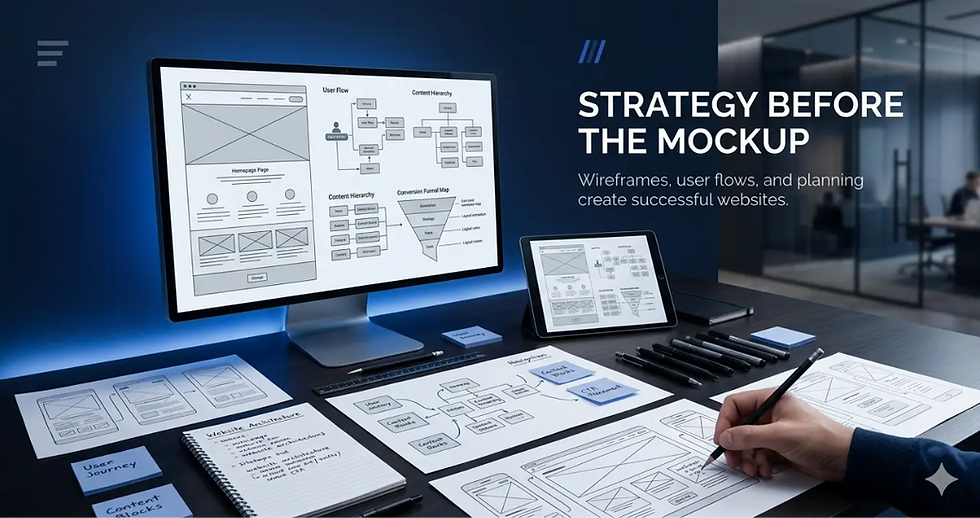
Start With the Questions, Not the Mockup
A website build should begin with a conversation about your customer, not a folder of layout options. When strategy comes first, the design has something real to support, and the finished site has a job it can actually do.
That is the whole point of conversion focused web design: decide who you are talking to and what you want them to do, then design to make that one thing easy.

Ready to map these seven answers to your own site? Book a free 30-minute consultation with AIPro.PH. It is a working session, not a sales call, and you leave with a clear next step whether or not we build it for you. |
Frequently Asked Questions
How is conversion focused web design different from regular web design?
Regular web design often prioritizes how a site looks. Conversion focused web design prioritizes what a visitor does, so structure, copy, and calls to action are planned around a specific action before any visuals are chosen.
Do I really need to answer these questions before a redesign?
Yes, especially for a redesign. Skipping them usually means recreating the same problems with a fresher coat of paint. The answers tell us which existing pages to keep, fix, or remove.
My current website looks fine. Why is it not getting inquiries?
Looking fine and converting are two separate things. A site can be attractive and still lack a clear next action, a strong headline, or visible proof, which are the elements that actually move a visitor to reach out.
How long does it take to build a site this way?
It depends on your lead timeline, which is question seven. Some businesses launch a homepage and contact page first for speed, while others build the full site in parallel before going live.
What if I do not have testimonials or case studies yet?
We work with what is true and specific: early client feedback, real numbers, before-and-after outcomes, or credentials. We also build proof slots into the layout, so they are ready when you have a result to add.
Is the consultation really free, and will it turn into a sales pitch?
The 30-minute consultation is free and built as a working session. You leave with a clear plan for your highest-priority pages, whether or not you decide to work with us.
Key Takeaways
• Define the single action you want on each page before any design starts, so the whole site supports one clear goal.
• Lead your homepage with your real differentiator, not your logo or tagline, to win attention in the first few seconds.
• Write down the main objection buyers have and answer it in your subheadline, FAQ, and trust signal placement.
• Audit which pages get traffic but few inquiries and fix those first for the fastest gains.
• Build proof slots into the design now, so testimonials and numbers are ready the moment you have a win to show.
• Set your lead timeline early, since it decides whether you launch key pages first or build everything at once.


Comments